The 38 Letters from J.D. Rockefeller to His Son by J D Rockefeller

My parents often share informative videos with my brother and me. Truth be told, I tend to ignore most of them, not wanting to spend the time it takes to absorb the shared content. However, when I saw a short clip about a book detailing advice from one of the most successful businessmen to his son, it piqued my interest.

It was only after I began reading The 38 Letters from J.D. Rockefeller that I realized John D. Rockefeller was not only one of the wealthiest people in history but also built his fortune through his oil refining business. Over the years, Rockefeller wrote 38 letters to his son, sharing insights and guiding him through life’s challenges. These letters allow readers a unique window into his career experiences and the thoughtful advice he imparted to his son. Below, I’ll share my three main takeaways from the book.

Letter 4: Opportunity Comes from Taking Action

Rockefeller emphasizes that opportunity rarely just appears – you have to go out and create it yourself. He advises taking risks and seizing opportunities when they arise, rather than waiting for them to come to you. He also acknowledges that life often feels overwhelming, with too many tasks and too little time, so it’s critical to focus only on the work that will yield the greatest results.

This advice resonates strongly in my own career. I see colleagues, myself included, sometimes feeling discontented with assigned projects, waiting for that big opportunity to showcase our worth, or hoping a manager will fulfill a long-promised career boost. But it’s important to remember that we have various avenues to pursue: seeking projects that interest us and gathering enough data to ensure they get prioritized, following up with our managers for specific commitments, or even exploring new job opportunities both internally and externally. Ultimately, we are in control of our career paths.

Letter 9: Confidence and Determination Lead to the Top

Rockefeller notes that while most people aspire to reach the highest level of success, few possess the confidence and determination needed to get there. Because many people doubt their ability to succeed, they often choose paths that keep them at an average level, limiting their potential.

To reach our goals, it helps to look closely at those already performing at the level we want to achieve and identify the gaps in our own skills. Why can’t we perform at that level today? By being specific about the skills we need to improve, we can often identify practical steps to bridge those gaps. Once the concrete steps are clear, all that remains is to apply the effort and determination to achieve them.

Letter 38: How Can I Do Better Today?

Rockefeller asks, “How can I make my work more efficient today?” This simple question serves as a powerful daily exercise.

Often, we get so accustomed to our routines that we operate on autopilot, following the same patterns day in and day out. But taking a little time each month to assess our daily approach can reveal ways to become more productive and intentional in how we spend our time.

In summary, I enjoyed reading this book and appreciated how J.D. Rockefeller used personal stories to communicate key lessons to his son. Advice delivered through storytelling often has a stronger impact, making it more relatable and memorable. This is a good read for anyone looking for inspiration presented in a unique format.
On Writing by Stephen King

My reading list was comprised of books recommended by friends, coworkers, and well-known CEOs online. I began to find that the books I read oftentimes end up having similar themes, so this time I decided to try something new. I went on Twitter and provided my book recommendations while at the same time requested people to provide me with theirs as well.

Here’s a list of books suggested to me via Twitter (thanks to Crystal):

Moonwalking with Einstein by Joshua Foer
The Bullet Journal Method by Ryder Carroll
Sometimes the Magic Works by Terry Brooks
On Writing by Stephen King

Not only did I never hear about any of these books before, but I also have never thought about reading some of these topics. This is exactly what I wanted. Even though I write blog posts occasionally but it never occurred to me to read books on writing. Having read On Writing by Stephen King I plan to put more focus on my writing.

stephen_king

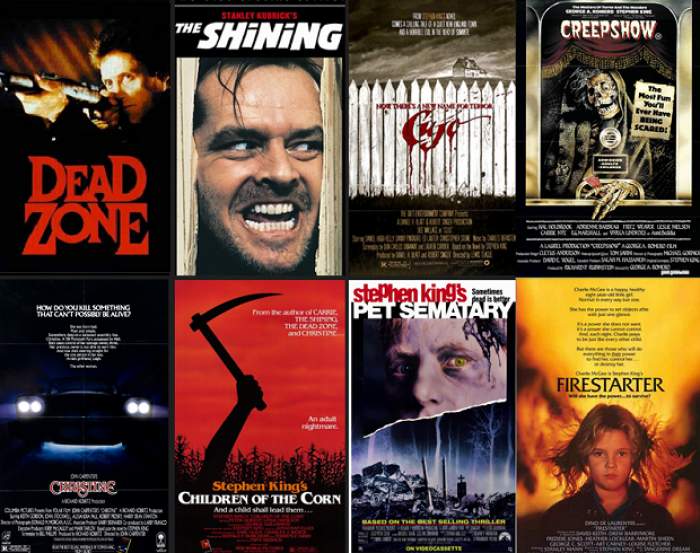
Stephen King, a well-known author most known for his work in horror fiction, has more than 350 million copies of his books sold. Many films, which include The Green Mile which I have frequently watched in the past, were based on his books.

On Writing by Stephen King details how Stephen became the writer he is today followed by a few of his writing tips. Stephen has a way of writing that transitions story in an engaging yet concise manner. I would be reading about how Stephen is dealing with numerous publisher rejections to how Stephen found success with his first published novel, Carrie, in the span of my 30 minutes commute.

In regards to his writing tips, it is nothing new that you won’t find in a writing/grammar book. However, as someone who’s not a prolific writer, I do find some of it useful. There’s one advice in particular which I have already started applying in my previous blog post:

In expository pose, paragraphs can (and should) be neat and utilitarian. The ideal expository graf contains a topic sentence followed by others which explain or amplify the first.


Topic-sentence-followed-by-support-and-description insists that the writer organize his/her thoughts, and it also provides good insurance against wandering away from topic.

I’m still working on it but I find this simple advice very useful. Previously when I write, I break out to a new paragraph with no clear structure. Sometimes it can seem like I’m just spitting out words as it comes to my mind. But since reading On Writing, I spend more time thinking about how I should structure my paragraphs which helps me organize my thoughts.

Upon reading his advice, I immediately flipped back and started to see if Stephen practices what he preaches which he does. Each paragraph has a main point it’s trying to convey through its topic sentence supported by the remaining sentences. If a point only has two sentences then so be it. There’s no need to unnecessarily expand a paragraph longer than it’s needed to convey your message across.

Stephen King also provides a few more writing tips such as “the adverb is not your friend” and “one of the cardinal rules of good fiction is to never tell us a thing if you can show us” that you can learn more about in his book.

I thoroughly enjoyed this book and got some insights on the career path of a writer and some of the challenges that come with it. If you are someone interested in a writing career or someone who wants to learn more about writing, then I’ll recommend this book to you.

Have you read this book? And is there any book you would recommend? I’ll love to hear your thoughts. 🙂

I’m currently reading Bad Blood by John Carreyrou.